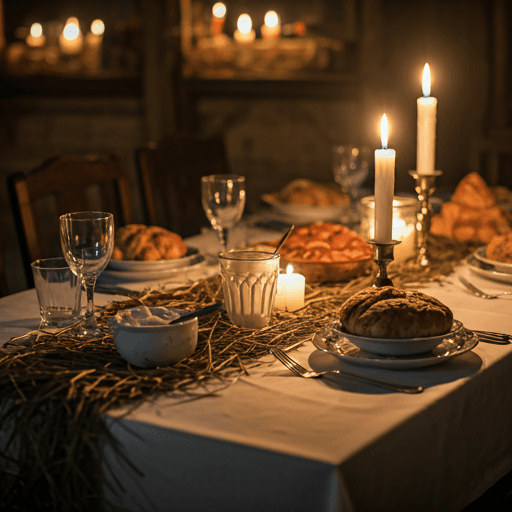
No date in the Polish calendar carries more weight than the evening of December 24. Wigilia — from the Latin 'vigilare', to keep watch — is not Christmas dinner; it is something quieter and stranger and more beloved: a ritual meal that begins only when the first star appears in the sky, in memory of the Star of Bethlehem.
Children are posted at windows as scouts, scanning the dusk for that first star (gwiazdka). The moment someone shouts that they've seen it, the family gathers, and an evening unfolds whose script has barely changed in centuries.
The Wafer and the Empty Chair
Wigilia opens with its most emotional moment: the sharing of opłatek, a thin white wafer. Each person breaks a piece from everyone else's wafer while exchanging personal wishes for the coming year — health, patience, that new job, forgiveness for old quarrels. It is common to see grandmothers cry, and it is the one moment of the year when things long unsaid get said.
The table itself is full of quiet symbols: hay tucked under the white tablecloth recalls the manger, and one place setting is always left empty — for the unexpected wanderer who might knock, and, unspoken, for family members who have died. No one at a Polish table on December 24 is ever really absent.
Twelve Dishes, No Meat
Tradition demands twelve dishes — one for each apostle, or each month of the year — and not one of them contains meat. The canon: beetroot barszcz with tiny uszka dumplings, carp, herring, pierogi with sauerkraut and mushrooms, kutia (sweet wheat with poppy seeds and honey), and kompot z suszu, a smoky drink of stewed dried fruit that foreigners approach with caution.
You must taste every dish — skipping one is said to mean losing that month's luck. The carp deserves special mention: in communist times fresh fish was scarce, so live carp were sold days early and kept swimming in the family bathtub until the 24th. Millions of Poles have childhood memories of a fish as a temporary pet — and of the moral catastrophe of naming it.
Carols, Presents, and Midnight
After supper come kolędy — Polish carols, some of them five centuries old — and the presents under the tree, delivered depending on the region by the Starman (Gwiazdor), the Little Star (Gwiazdka), the Angel, or baby Jesus himself; Santa Claus is a relative newcomer.
Folk belief holds that at midnight on Wigilia animals speak with human voices — though checking is said to bring bad luck. The night ends with Pasterka, the shepherds' midnight mass, when whole towns walk to church through the cold, and the calendar's most magical day closes with singing.
Curious Facts
- An even number of diners is traditionally required — an odd number was thought to bring misfortune, and an extra guest fixes the count.
- Live carp swimming in the bathtub before Wigilia is a genuine, widely shared Polish childhood memory.
- Hay under the tablecloth recalls the manger; unmarried girls once pulled out a blade to divine their marriage prospects — green meant a wedding soon.
- Poles living abroad receive opłatek wafers by post so they can 'share' them with family across continents.
- Legend says animals speak with human voices at midnight — but eavesdropping on them brings bad luck.
 Support this project