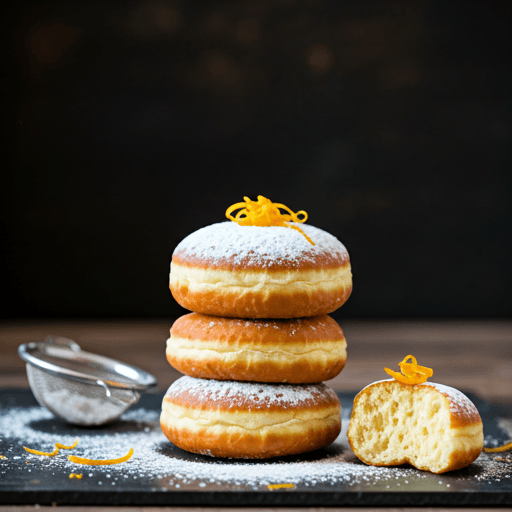
Once a year, Poland's diet collectively surrenders. On Tłusty Czwartek — Fat Thursday, the last Thursday before Lent — bakery queues form before sunrise, offices order pączki by the hundred, and news anchors solemnly report doughnut statistics. An estimated one hundred million pączki are eaten in a single day, in a country of thirty-eight million people.
The logic is ancient: carnival is ending, Lent is coming, and the fat, sugar, and eggs in the pantry must not go to waste. What began as pre-fasting thrift became the most cheerful compulsory holiday in the Polish calendar — because superstition says whoever skips their pączek invites a year of bad luck.
The Tail End of Carnival
Tłusty Czwartek opens the final week of karnawał (or zapusty, its older folk name) — the season of balls, sleigh parties, and feasting that runs from Epiphany to Ash Wednesday. In old Poland this was the social season: weddings were held, matches were made, and the nobility partied with a determination that scandalised visiting diplomats.
The Thursday feast itself has deep roots. In medieval and Renaissance Kraków, the day was celebrated with comber — raucous street festivities of the market women, with dancing, mock courts, and general licence. The gluttony was always the point: one last, officially sanctioned excess before forty days of herring.
Pączki, Faworki, and Arithmetic
The undisputed monarch of the day is the pączek — a yeast doughnut fried to deep gold and filled, canonically, with wild rose petal jam. Its lighter companion is faworki, also called chrust: brittle, twisted ribbons of dough dusted with icing sugar, known in English as angel wings.
The statistics are reported annually with mock gravity: roughly 2.5 pączki per Pole on the day, some bakeries frying around the clock, the famous ones — like Warsaw's Blikle — selling tens of thousands before noon. Nutritionists are invited on television to estimate the calories; the nation listens politely and orders another.
From Kraków to Chicago
Carnival closes six days later with ostatki ('the last ones') on Shrove Tuesday, and at midnight the music stops — traditionally enforced in villages by the symbolic burial of the double bass. Then comes Ash Wednesday, and Poland switches, with impressive discipline, from doughnuts to penance.
Polish emigrants took the custom with them, and in American Polonia cities — Chicago, Detroit, Buffalo — 'Paczki Day' is a recognised local holiday, often shifted to Mardi Gras Tuesday, complete with eating contests, polka music, and bakery lines that make the Warsaw ones look modest.
Curious Facts
- Poles eat an estimated 100 million pączki on Fat Thursday — about 2.5 per person, including infants.
- Skipping your pączek on Fat Thursday is said to guarantee bad luck for the entire year.
- Faworki ('angel wings') are the day's second treat — fried ribbons of dough so brittle they shatter at a glance.
- In old Kraków, market women celebrated the day with 'comber' — street revels that included mock trials and forced dancing.
- Carnival traditionally ends on Shrove Tuesday with the 'burial of the double bass' — a mock funeral for the music itself.
 Support this project