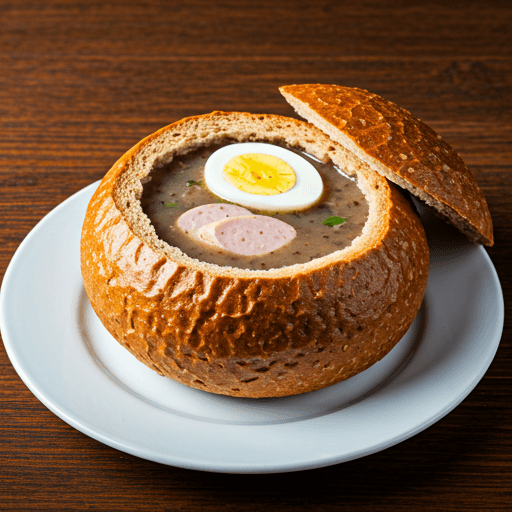
Żurek confuses first-time visitors: a soup that is deliberately sour, sometimes arrives inside a hollowed-out loaf of bread, and hides a whole sausage and half an egg beneath its creamy surface. Then they taste it, and the confusion turns into a second order.
The secret is zakwas — a rye-flour starter fermented for days until pleasantly tangy, the same principle as sourdough bread. That living, sour base makes żurek one of the oldest flavours in Polish cuisine, a direct taste of how Slavs cooked a thousand years ago.
A Thousand Years of Sour
Fermenting grain into sour soup is ancient Slavic practice — cheap, nourishing, and possible even in the leanest months. For centuries żur was everyday peasant food, eaten so relentlessly during Lent (when meat, and often dairy, was off the table) that people grew heartily sick of it.
That gave rise to one of Poland's oddest folk rituals: the 'funeral of żur'. On Good Friday or Holy Saturday, villagers would ceremonially bury, smash, or pour out a pot of żur — sometimes over an unsuspecting victim — to celebrate the end of Lenten penance before feasting on Easter meats.
How It Is Made
Everything starts with the zakwas: rye flour, water, garlic, and a few days of patience in a warm corner, until the mixture turns sour and lightly fizzy. Many households keep a jar going permanently, feeding it like a pet; others buy bottled zakwas, though grandmothers pretend not to see.
The starter is added to a broth built on smoked meats, then seasoned generously with garlic and marjoram — żurek's signature herb. In goes biała kiełbasa, the fresh white sausage, and the soup is finished with cream. It is served with halved hard-boiled eggs and, in its most theatrical form, inside a bread bowl you are allowed to eat afterwards.
When Poland Eats It
Żurek is the undisputed star of Easter breakfast, where it shares the table with the blessed foods from the święconka basket — eggs, sausage, bread, and horseradish. The white sausage and egg in the bowl are no accident: they are Easter symbols of new life.
The rest of the year, żurek is beloved winter fuel and enjoys a solid reputation as a hangover cure — sour, salty, and warm being exactly what the morning after requires. Poles also debate, with surprising heat, whether żurek and barszcz biały (white borscht) are different soups or the same one; the answer depends on the region, and it is safest not to take sides.
Curious Facts
- The soured rye starter (zakwas) ferments for 3–5 days; many families keep one alive continuously, like a sourdough pet.
- The old folk ritual 'pogrzeb żuru' — the funeral of żur — ceremonially destroyed a pot of the soup to celebrate the end of Lent.
- Whether żurek and white barszcz are the same soup is a genuine regional controversy — Silesia, Wielkopolska, and Mazovia all disagree.
- Serving żurek in an edible bread bowl became a signature of Polish restaurants — and yes, you may eat the bowl.
- Żurek is Poland's most trusted hangover remedy; some milk bars see a distinct Sunday-morning spike in orders.
 Support this project