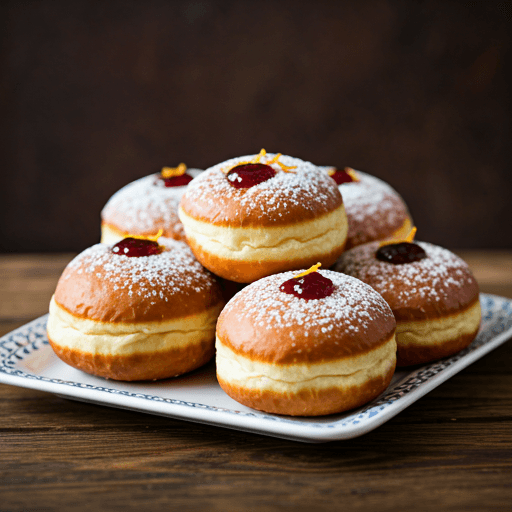
On the last Thursday before Lent, ordinary rules of nutrition are suspended across Poland. It is Tłusty Czwartek — Fat Thursday — and everyone, from schoolchildren to government ministers, eats pączki: plump, deep-fried doughnuts filled with rose petal jam. Bakeries open before dawn, and the queues outside famous pączkarnie wrap around city blocks.
Superstition adds urgency to appetite: whoever fails to eat at least one pączek on Fat Thursday is said to face bad luck for the rest of the year. Poles, sensibly, take no chances — an estimated one hundred million pączki disappear on that single day.
From Pork Fat to Rose Jam
The medieval ancestor of the pączek was nothing you would recognise: a dense bread-dough ball filled with pork fat and fried in lard, eaten to use up fat stores before the Lenten fast. The idea was practical, not indulgent — Lent forbade lard, sugar, and eggs, so households had to finish them off.
In the 16th and 17th centuries, Polish bakers softened the dough with eggs and yeast, sweetened it, and swapped the filling for fruit preserves. The konfitura z róży — jam made from wild rose petals — became the classic, and remains the filling by which every pączkarnia is judged.
How They Are Made
Proper pączki start with a rich yeast dough: flour, egg yolks, butter, milk, sugar — and a spoonful of spirit (vodka or rectified spirytus). The alcohol is not for flavour: it evaporates instantly in hot oil and stops the dough from soaking up grease, which is why a good pączek is feather-light rather than oily.
The dough rises twice, is shaped into balls, and deep-fried until deep gold, ideally showing the pale ring around the middle that connoisseurs read as proof of a perfect rise. Filling — rose jam, plum powidła, or custard — goes in before or after frying, and the top is finished with icing and candied orange peel.
When Poland Eats Them
Pączki are available all year, but Fat Thursday is their Super Bowl. Offices order them by the tray, schools hand them out, and news programmes report queue lengths outside legendary bakeries the way they report weather. Warsaw's Blikle — frying pączki since 1869 — remains the most famous address, with a customer list that once included Charles de Gaulle.
Polish emigrants carried the ritual across the ocean: in Chicago and Detroit, 'Paczki Day' is celebrated on the same Thursday — or, adapted to American custom, on Mardi Gras Tuesday — complete with pączki-eating contests and polka bands.
Curious Facts
- Poles eat an estimated 100 million pączki on Fat Thursday — roughly 2.5 per person, counting infants.
- A splash of vodka in the dough keeps pączki from absorbing oil — chemistry, not indulgence.
- Folk superstition warns that skipping pączki on Fat Thursday brings a year of bad luck.
- Warsaw's Blikle café has fried pączki since 1869; Charles de Gaulle was a regular during his 1920s posting in Poland.
- The idiom 'żyć jak pączek w maśle' — 'to live like a pączek in butter' — means to live in comfort and plenty.
- One doughnut is a 'pączek'; 'pączki' is plural — the same trap as pierogi.
 Support this project