A City of Trade and Revolution
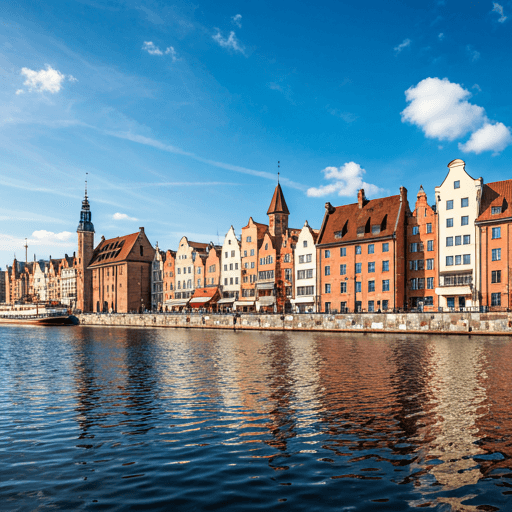
Gdańsk's history stretches back over a millennium. As a powerful member of the Hanseatic League, the city grew fabulously wealthy trading amber, grain, and textiles across northern Europe. Its merchants built the ornate Flemish-style façades that still line Long Street today, making the Old Town one of the most beautiful in the Baltic region.
On September 1, 1939, German forces fired the first shots of World War II at the Polish garrison on the Westerplatte peninsula — right in Gdańsk harbour. The city, then called Danzig and with a largely German population, was a flashpoint for tensions that had been building since the Versailles Treaty. After the war, its German inhabitants were expelled and the city was repopulated by Poles.
In August 1980, shipyard workers at the Lenin Shipyard launched a strike that changed the world. Led by electrician Lech Wałęsa, they formed Solidarity — the first independent trade union behind the Iron Curtain. The movement spread across Poland and ultimately became a catalyst for the peaceful collapse of communism across Eastern Europe.
Curious Facts
- Gdańsk is the amber capital of the world — roughly 90% of the world's amber supply comes from the Baltic coast, and the city's artisans have been crafting it for centuries.
- The Neptune Fountain on Long Market, erected in 1633, is one of the oldest secular fountains in Poland and the symbol of Gdańsk's seafaring identity.
- The Solidarity trade union, born at the Gdańsk Shipyard in 1980, is widely credited with triggering the collapse of communist regimes across Central and Eastern Europe.
- St Mary's Church is the largest brick church in the world, capable of holding 25,000 people. Construction took 159 years to complete.
Travel Guide
- Take the ferry from Gdańsk to the Hel Peninsula for a day on the Baltic — the beaches are stunning in summer.
- Browse the amber market stalls on Long Street for authentic jewellery; avoid tourist shops near the Green Gate.
- Entry to the European Solidarity Centre is free on certain days — check the schedule in advance.
- Malbork Castle, the world's largest Gothic castle, is just 40 minutes by train and one of Poland's most impressive sites.
What to Visit
Long Lane & Long Market (Długa / Długi Targ)
The showpiece of Gdańsk — a pedestrian boulevard lined with reconstructed Flemish merchant houses, anchored by the Golden Gate and Neptune Fountain.
European Solidarity Centre
A world-class museum dedicated to the Solidarity movement and its global impact, housed in a striking rust-coloured building at the historic shipyard gates.
St Mary's Basilica
The world's largest brick church, with a climb to the tower rewarding visitors with panoramic views across the city's red-roofed skyline and the Baltic horizon.
Westerplatte
The peninsula where the first shots of World War II were fired, now a solemn memorial park with ruins of the Polish garrison that held out for seven days.
 Support this project